

Upratnas · gem of Shukra, Venus
Opal Dudhiya Pathar
Welcome to the World of Opal (Doodhiya Patthar) Where colour does not stay — it breathes. Opal is not one shade, but movement held in light. In its shifting glow, softness returns, and balance finds its rhythm. दूधिया पत्थर— जहाँ रंग साँस लेते हैं यह एक रंग नहीं, चलती हुई रोशनी है। यह चमकता नहीं, जीवन को...
- Lab certifiedITLGR · IGITL · GFCO.ch · IIGJ · AGR · IGI · IGTLJ · LOTUS
- Treatment disclosedon every gem
- 10-day returnson loose gems
Not sure which opal is right for you?
Send your prescription or birth details and our gemologist will shortlist 2–3 pieces for you.
About Opal (Dudhiya Pathar)
Where colour does not stay — it breathes.
Opal is not one shade, but movement held in light. In its shifting glow, softness returns, and balance finds its rhythm.
दूधिया पत्थर — जहाँ रंग साँस लेते हैं
यह एक रंग नहीं, चलती हुई रोशनी है।
About
Planet: ♀ Shukra (Venus)
Governs: Beauty, harmony, relationships, creativity, comfort, refined pleasures, self-worth, and attraction
Opal is a gemstone deeply associated with the planet Venus (Shukra), which represents love, aesthetics, creativity, and emotional fulfillment. Because of this connection, Opal is believed to enhance personal charm, improve emotional balance, and strengthen one's sense of self-worth and attraction.
This gemstone is known for its gentle and uplifting energy. Rather than intensity, Opal brings softness — helping to ease emotional friction, restore harmony, and add a sense of lightness to one's thoughts and experiences. It is often chosen by individuals who want to bring more creativity, beauty, and emotional flow into their lives.
Opal aligns with Venus's energy to support confidence, creativity, and harmonious relationships. It encourages emotional openness, refined expression, and a stronger connection to pleasure, comfort, and self-appreciation.
It is particularly suited for those seeking balance in relationships, creative growth, and a renewed sense of joy and attraction in life. By reducing emotional heaviness and self-doubt, Opal supports ease, elegance, and a more expressive state of being.
⚠️ Important: Wear only after proper consultation with a qualified Vedic astrologer. Opal is a Venus gemstone, and suitability should always be confirmed before wearing.
Who should wear
- Artists, designers, and creative professionals
- Performers and those in expressive, aesthetic roles
- Those seeking emotional harmony in relationships
- Anyone wanting to strengthen Venus energy in the chart
- Those needing more confidence, softness, charm, or creative flow
- Wearers advised against Diamond or White Sapphire but requiring a Venus remedy
Commonly Considered During
- Shukra Mahadasha or Antardasha
- When Venus is weak, afflicted, or imbalanced in the natal chart
- Phases of emotional strain in relationships
- Periods of creative stagnation or blocked self-expression
- When Diamond or White Sapphire are not preferred for the wearer
Important
- ⚠ ️ Wear only after proper consultation with a qualified Vedic astrologer Opal is a Venus gemstone, and suitability should always be confirmed before wearing
Benefits
Benefits
- Confidence & Self-Worth — Restores the quiet assurance that comes from feeling at ease in oneself. Opal supports self-value not through force, but through emotional softness and inner steadiness.
- Charm & Attraction — Enhances natural grace, warmth, and presence. This is not artificial magnetism — it is the kind of attraction that comes when a person feels aligned and open.
- Creativity — Opens and sustains creative flow, expression, and inspired thinking. Especially supportive for artists, performers, and designers whose work depends on aesthetic sensitivity.
- Emotional Balance — Softens emotional turbulence and brings steadiness to sensitivity. Venus works best when the heart feels safe enough to stay open without becoming overwhelmed.
- Relationships — Supports warmth, harmony, affection, and genuine connection. Helpful when the emotional tone of relationships feels strained, distant, or uneven.
- Comfort & Prosperity — Invites the refined ease and tasteful abundance that Venus represents at its best — not indulgence without grounding, but beauty with balance.
- Venus Alignment — Brings Shukra's energy into balance when the chart calls for more softness, pleasure, harmony, creativity, or relational ease.
Pricing & origins
Pricing & Origins
Opal's value is shaped above all by its play-of-colour — the intensity, variety, and liveliness of light moving within the stone. Origin matters significantly, not only for value but for long-term stability and suitability for astrological wear.
| Origin | Character | Price / Carat | Astrological Use |
|---|---|---|---|
| Australia | Strong, stable rainbow play | ₹600 – ₹50,000+ | ✔ Preferred |
| Ethiopia | Bright, lively, vivid play | ₹500 – ₹5,000+ | ⚠ Better for jewellery |
Key differences by origin
Australian Opals:
- More stable and durable
- Better suited for long-term astrological wear and Venus remedies
- Lower moisture sensitivity
Ethiopian Opals:
- Visually striking and more budget-accessible
- Hydrophane in nature — absorb moisture
- Better suited to jewellery than long-term astrological use
Beyond origin, price is shaped by intensity and variety of colour play, base tone (black and blue Opals are the rarest and most premium), surface finish, structural stability, and whether the stone is solid natural Opal or composite. As always: a smaller Australian Opal with vivid, shifting colour will almost always outperform a larger, dull, or unstable stone.
Ideal weight: 6–7 ratti (approximately 5–6 carats). Best metal: Silver or Panchdhatu traditionally. Gold when astrologically advised.
Buyer awareness
Buyer Awareness (Before You Buy)
Assurance: All Our Opals Are Certified Natural & Genuine
We guarantee
- Certified natural opal with lab-verified authenticity
- 100% untreated and uncoated — no wax, resin, or fillers
- No doublets or triplets — only solid natural opal gemstones
- Transparent certification with clearly stated and verifiable details
What Makes an Opal Valuable?
Play-of-Colour (Most Important)
- Distinct, lively spectrum that shifts with movement
- Well-defined colour flashes — never flat, static, or dull
- Cloudy or muted play-of-colour may indicate poor quality or treatment
- Opals with no visible play-of-colour should be carefully examined
Base Tone
- Milky to white base — classic and traditionally preferred
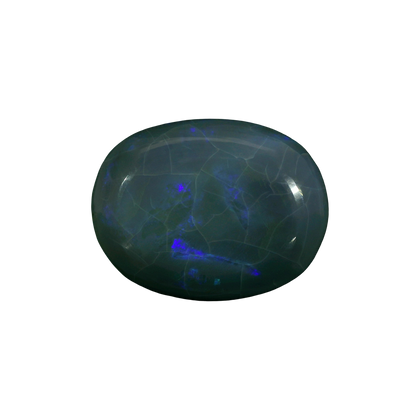
- Grey, blue, black, or green tones — equally beautiful and often more valuable
- Black and blue opals are the rarest and most premium
Surface & Finish
- Smooth polish with an even surface
- No visible cracks, pits, or chalky texture
- Well-proportioned dome with balanced shaping for durability
Origin & Stability
- Australian opals are renowned for stability, clarity, and long-term fire
- Ethiopian opals are visually striking but hydrophane, meaning they may cloud when exposed to moisture
- Origin directly affects durability, care requirements, and long-term appearance
Avoid Doublets & Triplets (Critical)
- Doublets: Thin opal layer bonded to a backing
- Triplets: Thin opal layer sandwiched between a backing and a clear cap
These are less durable, significantly lower in value, and are not considered solid natural opal gemstones.
Always confirm the opal is solid and natural through proper certification.
How to Verify a Genuine Opal
Certification Checklist
Ensure the certificate includes
- Verification from a credible third-party laboratory
- Confirmation that the stone is a natural opal
- Explicit mention that it is not a doublet or triplet
- Disclosure of any wax, resin, or filler treatment
- Clear origin declaration (Australian or Ethiopian)
- Hydrophane disclosure for Ethiopian opals
Why Some Opals Are Suspiciously Cheap
Low-priced opals are often
- Doublets or triplets misrepresented as solid opals
- Enhanced using wax or resin to improve appearance
- Sold with misleading origin claims
- Ethiopian opals falsely marketed as Australian
True value lies in natural character, authenticity, transparency, and long-term durability.
Care guide
Care & Treatment
Opal is softer than many gemstones and responds best to gentleness. It is not fragile when handled with awareness — but it does not forgive harshness.
Do:
- Clean gently with a soft cloth after wear
- Use mild soap and lukewarm water occasionally — for Australian Opals only
- Store separately in a padded box away from harder stones
- Ensure the setting is secure, especially in rings
Avoid:
- Water contact for Ethiopian Opals — can cause temporary cloudiness
- Perfumes, lotions, detergents, and alcohol-based products
- Ultrasonic or steam cleaning
- Heat and sudden temperature changes
- Gym sessions, manual work, or any physical impact while wearing
On treatments: All our Opals are 100% natural, untreated, and uncoated. What is never acceptable for astrological use — doublets, triplets, wax filling, resin filling, or any composite stone sold as solid. If a stone is not confirmed as solid, natural, untreated, and certified, it should not be purchased for astrological purposes.